Saturday, 2 May 2015

Hindu wedding : vivaha

A Hindu wedding is vivaha (Sanskrit: विवाह) and the wedding ceremony is called vivaah sanskar. The Hindus attach a lot of importance to marriages. The ceremonies are very colourful, and celebrations may extend for several days. The bride's and groom's home - entrance, doors, wall, floor, roof - are sometimes decorated with colors, balloons and other decorations.
The rituals and process in a Hindu wedding vary widely. Nevertheless, there are a few key rituals common in Hindu weddings - Kanyadaan, Panigrahana, and Saptapadi, which are respectively, giving away of daughter by the father, voluntarily holding hand near the fire to signify union, and taking seven steps with each step includes a vow/promise to each other before fire.The Hindu wedding ceremony at its core is essentially a Vedic yajna ritual. The primary witness of a Hindu marriage is the fire-deity (or the Sacred Fire) Agni, in the presence of family and friends. The ceremony is traditionally conducted entirely, or at least partially in Sanskrit, considered by Hindus as the language of holy ceremonies. The local language of the bride and groom is also used.
The pre-wedding and post-wedding rituals and celebrations vary by region, preferences or the resources of the groom, bride and their families. They can range from one day to multi-day events. Pre-wedding ceremonies include engagement (involving vagdana or betrothal and lagna-patra written declaration), and arrival of the groom's party at the bride's residence, often in the form of a formal procession with dancing and music. The post-wedding ceremonies may include Abhishek, Anna Prashashan, Aashirvadah, and Grihapravesa - the welcoming of the bride to her new home. The wedding marks the start of Grihastha (householder) stage of life for the new couple.
In India, by law and tradition, no Hindu marriage is binding and complete unless the ritual of seven steps and vows in presence of fire (Saptapadi) is completed by the bride and the groom together.This requirement is under debate.
A Hindu wedding is regionally called vivaha (Hindi: विवाह), (Bengali : বিবাহ), (Kannada: ಮದುವೆ (Maduve)), (Telugu: వివాహం).

Friday, 24 April 2015

Hindu Wedding: Bride's clothes

The bride wears a saree or a lehenga according to the region. Red is considered to be the most auspicious color in among Hindus. While the saree is preferred as the bridal dress in South India, West, East India, most brides of other parts of India prefer Lehenga, Gagra Choli and Odni as bridal dress.

Thursday, 16 April 2015

Hindu wedding: Bridegroom's clothes

Many communities of South,West and Eastern India still adhere to the traditional costumes,i.e. Dhoti,or sometimes Lungi,and Mundu by some communities of the South.Kurta or a shirt may be worn or sometimes just a Angavastram may be used to cover the chest. On the other hand in the Northern parts, bridegroom usually wears a Sherwani, Jodhpuri suit or a western suit. The groom’s face is covered with a veiled with a curtain of flowers which is called Sehra in the North,which is not the custom elsewhere. It is also customary to wear a Taqiyah all through the ceremony in Muslim marriages.
Many prefer to wear a Kurta.Kurta can be worn with Salwar,or Dhoti.
A dazzling series of ensemble for bridegrooms include majestic sherwani, blended Indo-western suit and ethnic Jodhpuri suit. The exquisite shirts, coats and jackets are designed with extra care and touch to bring out the magnanimity out of the bridegroom on the marriage day. Precious embellishments are studded into the collars and the cuffs of the bridegroom’s dress. Available both in simple cottons and splendid, royal raw silk, these Kurta Pyjamas are a preferred mostly by the bridegrooms.

Wednesday, 1 April 2015

Hindu wedding

Indian Hindu weddings continue for several days. India is a country that defines diversity and this is visible even in the wedding and its different styles. The ceremonies, the rituals, the formalities are all different between each region and culture. Unlike the Christians, Hindus wedding ceremony does not resemble the western marriages and are quite elaborate. In the North,Starting from the Tilak ceremony, each function has significance in the marriage. Tilak, Sangeet, Haldi, Baraat and the Shaadi, all necessitate the Bride and the bridegroom to wear new attire at each occasion.All these above ceremonies are known by different names in the other parts,e.g.:Simant puja in the west,or Mangalasnanam in the south and so on.But have got the same significance all over.

Friday, 20 March 2015

Telugu wedding: Post-wedding customs

After the wedding ceremony is over, the bride enters the groom’s house formally. She is given a hearty welcome by the groom’s family members. The uniting of Maṅgaḷasūtraṃ takes place after a fortnight.
Gr̥uhapravēśam (గృహప్రవేశం)
After the culmination of the wedding ceremony, the bride is formally taken to the groom’s house. This is called Gr̥hapravēśam of the bride. As she steps into her new home, she is welcomed by the groom’s family members, including his mother and closest relatives.
Satyanārāyaṇa Vratam (సత్యనారాయణ వ్రతం)
Satyam means "Truth" and Narayana means "The highest being" so Satyanārāyaṇa means "The highest being who is an embodiment of Truth". The Satyanārāyaṇa Vratam is very popular in Andhra Pradesh India. Satyanārāyaṇa Vratam is performed by bride and groom after Gr̥hapravēśam in groom's residence. This puja is first mentioned in Skanda Purana, Reva Kanḍa by Sūta mahāmuni to the r̥shis in Naimisharaṇya. The details are part of the Katha/"Story" that is usually read after the pūja. The Satyanārāyaṇa pūja/vratam can be performed on any day except on New-Moon.
Uniting the Maṅgaḷasūtraṃ
Gr̥uhapravēśam is followed by a ceremony, wherein the Maṅgaḷasūtraṃ is united. As a customary, the Telugu speaking people unite the two Maṅgaḷasūtraṃs (which was tied by the groom around the bride’s neck), on a common thread. This ritual is done sixteen days post wedding. This ritual can be performed by either the groom or an elderly member of the family. A few black or golden beads are slipped between the two 'plates' of the Maṅgaḷasūtraṃ, so that they do not clash with each other. The unison of Maṅgaḷasūtraṃ signifies the harmony between the two families. After the ceremony is over, the bride takes a bath and wears a new sari.

Thursday, 5 March 2015

Telugu wedding: Wedding customs

The rituals conducted by the Telugu speaking people during the ceremonious occasion of wedding are different from those conducted in neighboring southern state of India. In Andhra Pradesh, the Telugu people follow their own traditions, while conduction a wedding. The bride’s maternal uncle and her brother play a prominent role at the time of her marriage. Unlike other South Indian weddings, the muhūrtaṃ in Telugu weddings does not take place in the morning, but close to midnight. Telugu Brahmin wedding customs differ from the wedding customs of the other Telugu communities. In addition to the rituals mentioned below, their weddings start with rituals common in South Indian Brahmin weddings like Punyahavachanam, Niśchitārtham, Matrukapujanam, etc.
Maṅgaḷa Snānaṃ (మఙ్గళస్నానం)
As a part of Maṅgaḷa Snānaṃ custom, the bride and groom are required to take an auspicious bath on the wedding day. The aim is to purify them and make them prepared to perform sacred rites. This bath is called Abhyangana Snānam
Bridal Makeup
In this ceremony at the bride and grooms' respective houses, all the relatives and well wishers gather and they smear them with turmeric paste (Nalugu - which is a mixture of flours and turmeric powder) and oils. This is done to cleanse their skin, so that a natural glow is radiated after they bathe. This is where the actual ceremony starts. They are given a new set of clothing to wear and are blessed that everything goes by well in the preparation. The bride is told not to go out of the town until the actual wedding ceremony.
Aarti or Hārati (హారతి)
Oil is applied to the bride and groom at their respective houses. Thereafter, the family members get together to perform Aarti. They pray for the bride and groom to be granted the wisdom to lead their life happily
Ganēśa and Gauri Pūja (గణేశ పూజ ; గౌరీ పూజ)
Before the wedding ceremony, the groom attends the Ganesha and Gowri pooja, which is conducted at the maṇḍapaṃ. And the bride does the Gauri Pūja at the house with all her family members and relatives attending before going to the ceremony. It is during this time that "Pravara" a ritual of changing Bride's Gotram from her paternal Gotram to the Groom's Gotram, is performed. Elderly couples from both families are required to attend and witness the "Pravara" while the bride is performing Gauri Pūja.
Kanyādānaṃ (కన్యాదానం)
Kanyādānaṃ is the ceremony in which the girl’s family hands over their daughter’s responsibility to the groom. During the ceremony, the bride sits in a bamboo basket. Her maternal uncle brings her to the maṇḍapaṃ. Until the completion of the Kanyādānaṃ, the bride and groom are not allowed to look at each other and therefore, they are separated by a curtain that is place between them, as a partition. Thereafter, the bride’s parents wash the groom’s feet, as gesture of respect because on the day of wedding the bride groom is considered as "Lord Vishnu Svarūpaṃ" or incarnation of lord Vishnu who has come to marry their daughter who is considered as "Devi Lakshmi". The groom is made to chant "Dharmēca Arthēca Kamēcha Mokshēca Nāti Carāmi" three times and give Bride's father assurance three times that the bridegroom shall remain for ever her companion in joy and sorrow.
Paṇigrahaṇaṃ (పాణిగ్రహణం)
This means "holding hands". The groom holds the hand of the bride. The Mantras say: The Devas have offered you to me in order that I may live the life of a householder (Gruhasta); we shall not part from each other.
Jīlakarra Bellaṃ & Madhuparkaṃ (జీలకర్రాబెల్లం ; మధుపర్కం)
The priest recites the ślokaṃs from the Vedaas. Thereafter, the couple is asked to place a paste made from cumin seeds and jaggery on each other’s head. This custom is referred to as Jīlakarra-Bellamu. This ceremony is observed to communicate that the relationship of the married couple is unbreakable and inseparable. This is the actual muhūrtaṃ time if this ceremony is done all relax and complete the other ceremonies slowly. The ritual of changing Bride's Gotram, "Pravara" is once again performed on the marriage dais in the presence of groom and everyone attending the ceremony. Henceforth, the bride no more belongs to the father's gotra and belongs to Groom's gotra.
As a part of Madhuparkaṃ ritual, the bride dresses up in a white sari with a red border. The groom wears a white dhoti with a red border. White symbolizes purity and red represents strength.
Sumangaḷi (సుమంగళి)
Ten married women (Sumangaḷi) accompany the bride. Six out of the ten women hold plates containing sacred rice(a mixture of rice and turmeric powder), while the rest of the four hold small lit lamps on their respective plates. Rice represents abundance, while the lit lamps symbolize light.
Maṅgaḷasūtra Dhāraṇa
During Maṅgaḷasūtra Dhāraṇa means tying Maṅgaḷasūtraṃ. In order to perform the ritual, the partition between the bride and groom are removed. After removing the partition, the groom ties the two strings of the Maṅgaḷasūtraṃ, each with a golden disc, around the bride’s neck. The Maṅgaḷasūtraṃ represents the physical, mental and spiritual union of the couple. In the Telugu wedding, the groom ties three knots of Maṅgaḷasūtraṃ.
Akshitalu (అక్షితలు)
In the Akshitalu or Talaṃbrālu ceremony, the bride and groom exchange garlands. Married people witnessing this occasion come forward to bless the couple, by sprinkling flower petals and rice coated with turmeric powder.
Saptapadi (సప్తపది)
As a part of the Saptapadi rituals, the groom and bride walk seven steps together around the fire, while taking their oaths of caring, protecting, understanding, loving and guiding each other. During this the pallu (edge of the sari) of the bride’s sari is tied to one end of the groom's scarf (Kanḍuva).
Sthālīpākaṃ (స్థాలీపాకం)
Sthālīpākaṃ is a ritual where in the groom adorns the feet of the bride with silver toe rings. This also is believed that the man bends to the woman in order to claim her as his. Also in order to ward-off the evil eye, the bride is adorned by a string of black beads during the ceremony. These beads along with the silver toe rings symbolize that she is a married woman. Right after, a kunḍa (decorated silver or terra-cotta vessel) full of water is placed in front of the couple and a ring is put in. The groom puts his right hand in and the bride puts her left hand in and they fish for the ring. They do this three times and whoever wins more is supposed to be the dominant one in the marriage. This is a time of fun, because water splashes everywhere and there are chants and shouts of support for either side. Also, the bride is made to cook ( a namesake meal) on the sacred flame of the Agnihōtraṃ, symbolizing she is now responsible to take care of the health of her husband and family.
Appagintalu (అప్పగింతలు)
Appagintalu take place right at the end of the wedding. This is when the bride is traditionally handed off to the groom and his family.

Friday, 27 February 2015

Telugu wedding: Pre-wedding customs

The rich and varied cultural heritage of Andhra Pradesh, India, is reflected in the ceremonies conducted there. Almost all festivals are celebrated with religious observances, holding supreme importance in the lives of the residents of the state.
Niśchitārtham (నిశ్చితార్థం)
Niśchitārtham means engagement. The two families meet to perform rituals to make the engagement official. A muhūrtaṃ (auspicious date & time) for the wedding is decided based on horoscopes. The Telugu people generally avoid the months or a time period where Aashaadham, Bhadrapadam and Shunya maasam occurs, because they are considered inauspicious for the ceremonies. The couple is then blessed by elders of both families, and is given gifts including jewelry and clothing by their new family. During this ceremony the future mother-in-law of the bride presents her with clothes, gold and also silverware, formally ending the engagement (Niśchitārtham).
Snātakaṃ (స్నాతకం)
Snātakaṃ means Graduation or Bath Graduate or Post graduation. It is usually performed before house-holder responsibilities are handed over to the Groom. Snaatakam ritual takes place at the bridegroom’s residence before the muhūrtaṃ. As a part of this custom, the groom is asked to wear a silver thread on his body. The ritual is conducted a few hours prior to the wedding.
Kāśī Yātra (కాశీ యాత్ర)
Traditionally, after Snātakaṃ, groom will be eligible for higher studies and he will be eligible to go to Kashi and study further or become Sanyasi. However, as a pre-wedding ceremony, the groom just pretends to go to Kashi and says that he has discarded the worldly pleasures (such as marriage, relations and properties) and is no more interested in leading a family life. He will then be stopped by the brother(cousins) of the bride, who persuade him to assume the responsibility of a house hold as in they tease each other quite a lot and groom readily agrees for it in the end.

Friday, 20 February 2015

Telugu wedding ceremony

The Telugu wedding ceremony is the traditional wedding ceremony of the Telugu people in India. In the 19th century, the ceremony could last up to 16 days (Padahaaru Rojula Panduga). In modern times, it can last 5 or more days, depending on the family's financial and social status.
Vivaham or Wedding considered the strongest of social bonds, is said to spiritually merge two souls opening the doors to "Gruhastaashramam" (household life). As per a Telugu saying, "marriage is supposed to be a family union and not an individual formality".
Telugu marriage is sanctified by seven pledges made by the bride and groom and commences when the bride and groom have completed seven revolutions around a sacred fire. Symbolic gestures and rituals encompass the ceremony and ensure that the bride and groom are united in the presence of Panchabhutaalu (Five essential elements for life) namely Bhumi (Earth), Akaasham (Sky), Agni (Fire), Neeru (Water) and Vaayuvu (air). The ceremony is held under the Kaḷyāṇa Maṇḍapaṃ or wedding pavilion decorated with fresh flowers. "Nādasvaram" (also called Shehnai in North India) an Indian musical instrument traditionally accompanies most Telugu weddings.
Earlier Groom rides an elephant to Bride's place where wedding is supposed to take place. This process is called "Gajaarohana". Nowadays this tradition is fading out.
Some marriages are done in the temple in presence of god but most of them are conducted outside because of the number of people in attendance. After every ceremony they serve food to all the guests which is also the main part of the culture of offering food to anyone who comes on an auspicious day . All the rituals conducted throughout the Telugu wedding ceremony hold religious significance. Each element in the ceremonies is connected with the other and is given special importance.
The decorations mostly consist of flowers and mango leaves in rich colors. The families renovate their houses and invite all the guests going to each of their houses with the kumkuma. It is also a tradition to eat ice cream or sweets before dinner because it is considered auspicious.

Thursday, 12 February 2015

Love


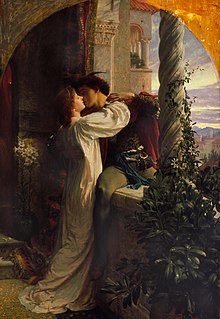
Love is a variety of different feelings, states, and attitudes that ranges from interpersonal affection ("I love my mother") to pleasure ("I loved that meal"). It can refer to an emotion of a strong attraction and personal attachment. It can also be a virtue representing human kindness, compassion, and affection—"the unselfish loyal and benevolent concern for the good of another". It may also describe compassionate and affectionate actions towards other humans, one's self or animals.


Ancient Greeks identified four forms of love: kinship or familiarity (in Greek, storge), friendship (philia), sexual and/or romantic desire (eros), and self-emptying or divine love (agape). Modern authors have distinguished further varieties of romantic love. Non-Western traditions have also distinguished variants or symbioses of these states. This diversity of uses and meanings combined with the complexity of the feelings involved makes love unusually difficult to consistently define, compared to other emotional states.


Love in its various forms acts as a major facilitator of interpersonal relationships and, owing to its central psychological importance, is one of the most common themes in the creative arts.


Tuesday, 10 February 2015

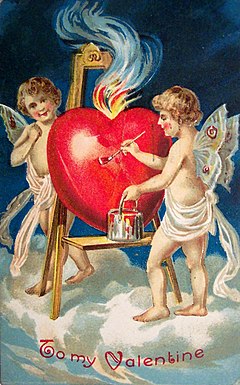
Valentine's Day


Saint Valentine's Day, also known as Valentine's Day or the Feast of Saint Valentine, is a holiday observed on February 14 each year. It is celebrated in many countries around the world, although it is not a holiday in most of them.

St. Valentine's Day began as a liturgical celebration one or more early Christian saints named Valentinus. Several martyrdom stories were invented for the various Valentines that belonged to February 14, and added to later martyrologies. A popular hagiographical account of Saint Valentine of Rome states that he was imprisoned for performing weddings for soldiers who were forbidden to marry and for ministering to Christians, who were persecuted under the Roman Empire. According to legend, during his imprisonment, he healed the daughter of his jailer, Asterius. An embellishment to this story states that before his execution he wrote her a letter signed "Your Valentine" as a farewell. Today, Saint Valentine's Day is an official feast day in the Anglican Communion, as well as in the Lutheran Church. The Eastern Orthodox Church also celebrates Saint Valentine's Day, albeit on July 6 and July 30, the former date in honor of the Roman presbyter Saint Valentine, and the latter date in honor of Hieromartyr Valentine, the Bishop of Interamna (modern Terni). In Brazil, the Dia de São Valentim is recognized on June 12.

The day was first associated with romantic love in the circle of Geoffrey Chaucer in the High Middle Ages, when the tradition of courtly love flourished. In 18th-century England, it evolved into an occasion in which lovers expressed their love for each other by presenting flowers, offering confectionery, and sending greeting cards (known as "valentines"). In Europe, Saint Valentine's Keys are given to lovers "as a romantic symbol and an invitation to unlock the giver’s heart", as well as to children, in order to ward off Saint Valentine's Malady.[6] Valentine's Day symbols that are used today include the heart-shaped outline, doves, and the figure of the winged Cupid. Since the 19th century, handwritten valentines have given way to mass-produced greeting cards.


Thursday, 5 February 2015

Visiting card


A visiting card, also known as a calling card, is a small paper card with one's name printed on it, and often bearing an artistic design. In 18th century Europe, the footmen of aristocrats and royalty would deliver these first European visiting cards to the servants of their prospective hosts solemnly introducing the arrival of their owners.


Tuesday, 3 February 2015

Wedding invitation


A wedding invitation is a letter asking the recipient to attend a wedding. It is typically written in formal, third-person language and mailed five to eight weeks before the wedding date.

Like any other invitation, it is the privilege and duty of the host—historically, for younger brides in Western culture, the mother of the bride, on behalf of the bride's family—to issue invitations, either by sending them herself or causing them to be sent, either by enlisting the help of relatives, friends, or her social secretary to select the guest list and address envelopes, or by hiring a service. With computer technology, some are able to print directly on envelopes from a guest list using a mail merge with word processing and spreadsheet software.


Tuesday, 27 January 2015

Playing card

A playing card is a piece of specially prepared heavy paper, thin cardboard, plastic-coated paper, cotton-paper blend, or thin plastic, marked with distinguishing motifs and used as one of a set for playing card games. Playing cards are typically palm-sized for convenient handling.

A complete set of cards is called a pack (UK English), deck (US English), or set (Universal), and the subset of cards held at one time by a player during a game is commonly called a hand. A pack of cards may be used for playing a variety of card games, with varying elements of skill and chance, some of which are played for money. Playing cards are also used for illusions, cardistry, building card structures, cartomancy and memory sport.

The front (or "face") of each card carries markings that distinguish it from the other cards in the pack and determine its use under the rules of the game being played. The back of each card is identical for all cards in any particular pack, and usually of a single colour or formalized design. Usually every card will be smooth; however, some packs have braille to allow blind people to read the card number and suit. The backs of playing cards are sometimes used for advertising. For most games, the cards are assembled into a pack, and their order is randomized by shuffling.

Dedicated deck card games have sets that are used only for a specific game. The cards described in this article are used for many games and share a common origin stemming from the standards set in Mamluk Egypt. These sets divide their cards into four suits each consisting of three face cards and numbered or "pip" cards.

Tuesday, 20 January 2015

Greeting card

A greeting card is an illustrated piece of card or high quality paper featuring an expression of friendship or other sentiment. Although greeting cards are usually given on special occasions such as birthdays, Christmas or other holidays, they are also sent to convey thanks or express other feelings. Greeting cards, usually packaged with an envelope, come in a variety of styles. There are both mass-produced as well as handmade versions that are distributed by hundreds of companies large and small. While typically inexpensive, more elaborate cards with die-cuts or glued-on decorations may be more expensive.

Hallmark Cards and American Greetings are the two largest producers of greeting cards in the world today.


In Western countries and increasingly in other societies, many people traditionally mail seasonally themed cards to their friends and relatives in December. Many service businesses also send cards to their customers in this season, usually with a universally acceptable non-religious message such as "happy holidays" or "season's greetings".


The Greeting Card Association is an international trade organization representing the interests of greeting card and stationery manufacturers. John Beeder, former president of the Greeting Card Association, says greeting cards are effective tools to communicate important feelings to people you care about: "Anyone feels great when they receive an unexpected card in the mail. For me, there’s nothing like a greeting card to send a special message. I’m proud to be a part of an industry that not only keeps people connected, but uses both imagery and the power of words to help us express our emotions.”

Tuesday, 13 January 2015

Place card

A place card is a piece of paper indicating what table a guest at an event, such as a wedding or banquet, is assigned to sit. Place cards generally have the guest's name and table number, and frequently have some design as well to add style.

Place cards also serve the function of identification of those who may otherwise be unknown to one another. Once taken by the respective guests, they are placed at the assigned seat, and once there, this enables others to identify the person sitting in that seat by name.

At some weddings, place cards can double as the menu for the food that is served at the wedding.

Place cards are not only used for Weddings and are not always pieces of paper. Theme based celebrations have become extremely popular for such party celebrations as Bar and Bat Mitzvah celebration meals, as well as birthdays, sports banquets, anniversaries, retirements, corporate events, etc. Custom place cards coordinated with the celebrant's theme have become very popular as well.

Place cards can be decorated to fit the party's theme. For example, if the theme of the wedding or party is a beach theme, the card might have a tropical flower on it. Cards can also indicate tables using token objects. Sea shells, party gifts, color of the tablecloth, plates or cups on the table may be used to identify the assigned table.


Saturday, 10 January 2015

Card designer


A designer is a person who designs. More formally, a designer is an agent that "specifies the structural properties of a design object".In practice, anyone who creates tangible or intangible objects, such as consumer products, processes, laws, games and graphics, is referred to as a designer.


Tuesday, 6 January 2015

South Asian wedding card

Since the medieval period, Indian wedding cards have carried great importance in the Indian subcontinent, and are known through several names such as :निमंत्रण पत्र/पत्रिका, Nimantran Patra/Lagnapatrika/Kankotri and many more. These invitation cards are used for announcing the marriage ceremony and this process of sending an invitation card to guests and relatives forms an integral part of the ritual. Simultaneously, these cards are famous worldwide for their unique patterns, colors and symbols. The presence of these different elements in a marriage card makes it appropriate for the matrimonial ceremony and without it the event is incomplete and unsuccessful.It is a known fact that different types of Indian wedding invitation cards such as Hindu wedding cards, Islamic or Muslim cards, Christian wedding cards, Sikh matrimonial cards and many more are available which cater to respective religion and caste. At the same time, these wedding cards are designed with beautiful gemstones, kundans, ribbons and precious jewels to give the perfect look and grace to the matrimonial ceremony. But, while purchasing or selecting marriage invitation cards it is necessary to keep in mind certain basic points like wedding theme, quality of the paper used, budget and much more.
Apart from this nowadays, the bride and groom go along with their family members to make the selection of invitation card which suits their style and wedding theme. The couples select card on the basis of various elements which are as follows:-
• Designs or Patterns- Usually for Indian wedding cards have designs like peacock or peacock feather; diya (lamp), swastika, and OM are used for designing these cards. These designs have religious meaning and speak about the Indian culture.
• Colors- Various types of colors such as red, orange, yellow, green and many more are used in preparing these cards. At the same time, special importance is given to color combination because it must match with the patterns used in the invitations.
• Wordings- Indian wedding cards are written in English as well as Hindi language. The wordings used in them are very simple and easy to understand. The cards contain the details of the venue with date and time, name of the bride and groom along with their parents. The main motto is to invite the guests to give their blessings to the newlywed couple or bride & groom.